Diet ‘suppressance’ has arrived in Britain…?
Rachel Reeves et al did their utmost to depress the British shopper to excellent effect through 2024 and 2025, manifested in low ongoing consumer confidence, which fed its way into rather subdued domestic consumer markets. The Treasury’s wholesale incompetence was not the whole story, however, when it came to the what turned out to be negative year-on-year grocery retail volumes in December 2025, which led one to wonder if this was the first time that we witnessed a tangible impact of diet suppressant drugs, glucagon-peptides (GLPs), upon the British food market?
It remains a bit early still to be too demonstrative about the moving parts around UK grocery volumes, which NIQ stated fell marginally, by 0.2% in the December 1-27 2025 trading period. However, we point out that real incomes also rose in December year-on-year, indeed, the Asda Income Tracker actually spoke to a slight increase in discretionary spending capability, that is what households have to spend after they pay tax and National Insurance (NIC), and the cost of essential items like local taxes (rates), energy costs and foodstuffs.
Furthermore, largely due to in-migration, the UK population has risen in the 2020s by over 2 million people, which ordinarily should make for a nudge up in population originated grocery volume growth, noting that with food inflation, measured by the ONS, being elevated in 2025, over 5%, largely reflecting the Rachel Reeves’ policies on NICs and the National Living Wage (NLW), amongst other things, resting alongside annual wage growth of 4.5-5.0%, means that the net affordability of food did not notably changed.
All these moving parts suggest to us that something else was at play and that new factor may just have been the growing impact of GLPs upon domestic grocery demand. We have harboured a gut feel, no pun intended, that the introduction and growing participation of diet suppressant drugs was potentially evident in the rather weak volumes of firms like B&M bargain stores, which sell a lot of biscuits, confectionery, and snacks, Domino’s Pizza and food-to-is player Greggs. That gut feel was directly confirmed by Greggs’ Chief Executive Officer in commenting upon the Group’s January 2026 trading statement, speaking to the need to build its assortment of GLP compatible products, whilst also thinking about portion size.
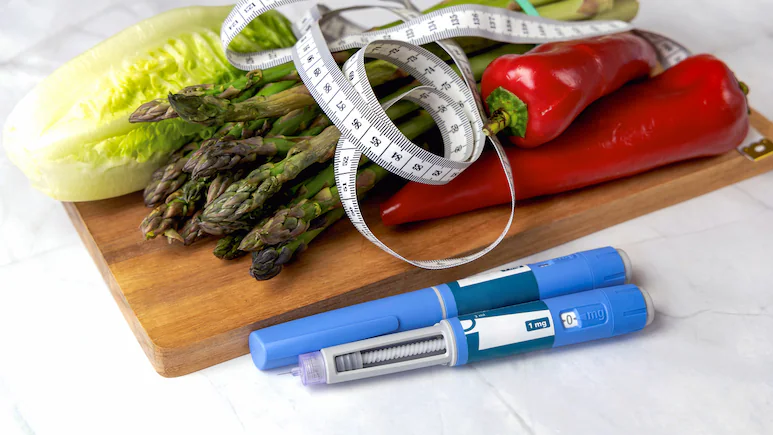
The impact of GLPs may, it should be said, have a much greater impact upon ongoing food markets in the UK. Indeed, it may be the most important innovation of recent times; it is estimated that over 10% of US adults are already injecting the drug. However, the impact of the ‘injections’ feeds differentially into product categories, notably favouring protein and fruit, salad, and vegetables, plus fibre, to the extent that it cannot be consumed by fresh produce, demand, but works against standard carbohydrates, which is a warning signal for commoditised starches from beer to white bread, potatoes to rice. Furthermore, for more complexity foodstuffs like salty snacks, the ongoing demand impact could be quite profound.
What is perhaps more encouraging for the grocery trade is that GLPs may encourage the mix of grocery baskets to improve, so supporting basket values, noting that premiumisation has been just about the strongest element of recent growth in British supermarkets, Sainsbury and Tesco speaking in their respective New Year 2026 trading statements to the third year of mid-teen percentage premium private label demand growth. Such products tend to be fresher and more chilled over ambient and frozen, their assortments perhaps also being relatively well placed if the GLP gains ongoing momentum, which appears likely.
As to the deliverability of GLPs, developments are likely to increase participation, not least as injections, which is a barrier for many folks, are replaced by tablets, the Food & Drug Administration (FDA) in the USA has in January 2026 approved oral semaglutide, a once daily pill, whilst it is also probable that public health authorities will join private ones through increased distribution. Whilst a bit more ‘blue sky’, it is not wholly fanciful to imagine that foodstuffs could yet be put through the medical approval process to bypass injections and pills altogether.
Indeed, one of the more notable grocery news features of 2026 has been British retailers seeking to profile their diet suppressant credentials either with ready meals that are compatible with the associated claims or foodstuffs that complement a GLP influenced diet. Whilst this feels a bit like the Wild West, with much scope for misleading claims and potential consumer rip-off if not health harm, the quite dosy Foods Standards Agency and DEFRA, ‘dosy’ is not the appropriate terms for that organisation, would do well to keep a quite close on this rapidly evolving market from a consumer protection perspective.
Whilst it remains to be seen whether or not diet suppressant drugs were a part of the anaemic Christmas 2025 UK grocery market volumes, future months may answer that conundrum, it is hard not to believe that they will not become more important, so conditioning many facets of the industry from volume over value composition, category performance, retail fascia performance, and, indeed, consumer protection.
Dr Clive Black
Senior Advisor to Coriolis Consulting
January 2026